Old Testament
Genesis Exodus Levitikus Numeri Deuteronomium Josua Richter Rut 1 Samuel 2 Samuel 1 Könige 2 Könige 1 Chronik 2 Chronik Esra Nehemia Ester Hiob Psalm Sprüche Prediger Hohelied Jesaja Jeremia Klagelieder Hesekiel Daniel Hosea Joel Amos Obadja Jona Micha Nahum Habakuk Zephanja Haggai Sacharja MaleachiChapter
Psalm 1 Psalm 2 Psalm 3 Psalm 4 Psalm 5 Psalm 6 Psalm 7 Psalm 8 Psalm 9 Psalm 10 Psalm 11 Psalm 12 Psalm 13 Psalm 14 Psalm 15 Psalm 16 Psalm 17 Psalm 18 Psalm 19 Psalm 20 Psalm 21 Psalm 22 Psalm 23 Psalm 24 Psalm 25 Psalm 26 Psalm 27 Psalm 28 Psalm 29 Psalm 30 Psalm 31 Psalm 32 Psalm 33 Psalm 34 Psalm 35 Psalm 36 Psalm 37 Psalm 38 Psalm 39 Psalm 40 Psalm 41 Psalm 42 Psalm 43 Psalm 44 Psalm 45 Psalm 46 Psalm 47 Psalm 48 Psalm 49 Psalm 50 Psalm 51 Psalm 52 Psalm 53 Psalm 54 Psalm 55 Psalm 56 Psalm 57 Psalm 58 Psalm 59 Psalm 60 Psalm 61 Psalm 62 Psalm 63 Psalm 64 Psalm 65 Psalm 66 Psalm 67 Psalm 68 Psalm 69 Psalm 70 Psalm 71 Psalm 72 Psalm 73 Psalm 74 Psalm 75 Psalm 76 Psalm 77 Psalm 78 Psalm 79 Psalm 80 Psalm 81 Psalm 82 Psalm 83 Psalm 84 Psalm 85 Psalm 86 Psalm 87 Psalm 88 Psalm 89 Psalm 90 Psalm 91 Psalm 92 Psalm 93 Psalm 94 Psalm 95 Psalm 96 Psalm 97 Psalm 98 Psalm 99 Psalm 100 Psalm 101 Psalm 102 Psalm 103 Psalm 104 Psalm 105 Psalm 106 Psalm 107 Psalm 108 Psalm 109 Psalm 110 Psalm 111 Psalm 112 Psalm 113 Psalm 114 Psalm 115 Psalm 116 Psalm 117 Psalm 118 Psalm 119 Psalm 120 Psalm 121 Psalm 122 Psalm 123 Psalm 124 Psalm 125 Psalm 126 Psalm 127 Psalm 128 Psalm 129 Psalm 130 Psalm 131 Psalm 132 Psalm 133 Psalm 134 Psalm 135 Psalm 136 Psalm 137 Psalm 138 Psalm 139 Psalm 140 Psalm 141 Psalm 142 Psalm 143 Psalm 144 Psalm 145 Psalm 146 Psalm 147 Psalm 148 Psalm 149 Psalm 150Verse
Psalm 68:1 Psalm 68:2 Psalm 68:3 Psalm 68:4 Psalm 68:5 Psalm 68:6 Psalm 68:7 Psalm 68:8 Psalm 68:9 Psalm 68:10 Psalm 68:11 Psalm 68:12 Psalm 68:13 Psalm 68:14 Psalm 68:15 Psalm 68:16 Psalm 68:17 Psalm 68:18 Psalm 68:19 Psalm 68:20 Psalm 68:21 Psalm 68:22 Psalm 68:23 Psalm 68:24 Psalm 68:25 Psalm 68:26 Psalm 68:27 Psalm 68:28 Psalm 68:29 Psalm 68:30 Psalm 68:31 Psalm 68:32 Psalm 68:33 Psalm 68:34 Psalm 68:35

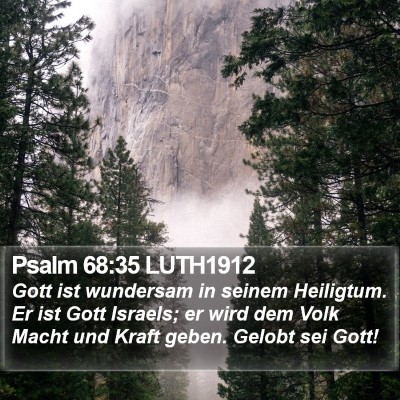



Psalm 68:35 – Gottes Wunderwirkung im Heiligtum
Direkte Bedeutung: Gott ist wunderbar in seinem heiligen Ort; er ist der Gott Israels, und er wird dem Volk Macht und Kraft geben. Lobpreis bricht durch in der Erkenntnis, dass Gottes Gegenwart im Heiligtum Stärke verleiht und den Gläubigen neue Fähigkeit und Sieg schenkt.
Hintergrund und Kontext
Psalm 68 feiert Gottes triumphale Gegenwart unter dem Volk Israel, insbesondere in der Barak- und Pilgerzeit. Der Vers betont die Würde Gottes als der göttliche Beschützer und Obrigkeit, der seinen Bund erneuert, seinem Volk beisteht und ihm Stärke verleiht. Das Bild des Heiligtums verweist auf die Nähe Gottes zum Volk, sei es in der zeitlichen Gegenwart der Stiftshütte oder letztlich in der Gegenwart Gottes unter dem Königtum Gottes.
Interpretationsbeobachtungen
Thematische Gliederung
Verwandte Stellen und kurze Erklärungen
Psalm 22:4-5 – Die Anerkennung, dass Gott als lebendige Hilfe kommt, wenn der Gerechte ruft; die Gegenwart Gottes gibt Rettung. Hinweis: Gottes Nähe ruft Vertrauen und Lob hervor.
Psalm 46:2-3 – Gott als Zuflucht in not- und sturmreichen Zeiten; seine Gegenwart bietet Sicherheit und Stärke. Verbindung: Die Stärke, die hier beschrieben wird, entspringt der Nähe Gottes.
Jesaja 40:29-31 – Gott stärkt die Müden, verleiht neue Kraft und lässt die, die auf ihn warten, neu aufflammen. Verbindung: Die versprochene Kraft widersteht Erschöpfung durch Gottes Heiligtumsnähe.
Praktische Schlussbetrachtung
Für Gläubige heute bedeutet diese Zeile, dass Gottes Gegenwart nicht nur Verherrlichung ist, sondern praktische Stärkung: Glaube an seine Nähe gibt Mut, Aufgaben anzugehen, und Vertrauen darauf, dass Gott Kräfte spendet, um treu zu wandeln. In Zeiten der Schwäche erinnert der Vers daran, dass Gottes Heiligtum eine Quelle der Kraft bleibt – eine Einladung zum Gebet, zum Lob und zum gehorsamen Dienst.
Bezug zu anderen Stimmen
Quellenhinweise: Matthew Henry, Albert Barnes, Adam Clarke betonen jeweils die Heiligkeit Gottes, die Nähe seines Heiligtums und die befreiende Kraft, die aus der Gottesbeziehung erwächst. Eine knappe Einschätzung ihrer Einsichten: Henry hebt die wunderbare Gegenwart Gottes hervor; Barnes betont die Verbindung zur Bundestreue; Clarke erläutert die praktische Wirkung der Stärke im Glaubensleben. Kirchengeschichtlich wird dort betont, dass Gottes Wirken im Heiligtum; heute verstanden als Gottes Gegenwart im Glauben durch seinen Geist.