Old Testament
Genesis Exodus Levitikus Numeri Deuteronomium Josua Richter Rut 1 Samuel 2 Samuel 1 Könige 2 Könige 1 Chronik 2 Chronik Esra Nehemia Ester Hiob Psalm Sprüche Prediger Hohelied Jesaja Jeremia Klagelieder Hesekiel Daniel Hosea Joel Amos Obadja Jona Micha Nahum Habakuk Zephanja Haggai Sacharja MaleachiChapter
Psalm 1 Psalm 2 Psalm 3 Psalm 4 Psalm 5 Psalm 6 Psalm 7 Psalm 8 Psalm 9 Psalm 10 Psalm 11 Psalm 12 Psalm 13 Psalm 14 Psalm 15 Psalm 16 Psalm 17 Psalm 18 Psalm 19 Psalm 20 Psalm 21 Psalm 22 Psalm 23 Psalm 24 Psalm 25 Psalm 26 Psalm 27 Psalm 28 Psalm 29 Psalm 30 Psalm 31 Psalm 32 Psalm 33 Psalm 34 Psalm 35 Psalm 36 Psalm 37 Psalm 38 Psalm 39 Psalm 40 Psalm 41 Psalm 42 Psalm 43 Psalm 44 Psalm 45 Psalm 46 Psalm 47 Psalm 48 Psalm 49 Psalm 50 Psalm 51 Psalm 52 Psalm 53 Psalm 54 Psalm 55 Psalm 56 Psalm 57 Psalm 58 Psalm 59 Psalm 60 Psalm 61 Psalm 62 Psalm 63 Psalm 64 Psalm 65 Psalm 66 Psalm 67 Psalm 68 Psalm 69 Psalm 70 Psalm 71 Psalm 72 Psalm 73 Psalm 74 Psalm 75 Psalm 76 Psalm 77 Psalm 78 Psalm 79 Psalm 80 Psalm 81 Psalm 82 Psalm 83 Psalm 84 Psalm 85 Psalm 86 Psalm 87 Psalm 88 Psalm 89 Psalm 90 Psalm 91 Psalm 92 Psalm 93 Psalm 94 Psalm 95 Psalm 96 Psalm 97 Psalm 98 Psalm 99 Psalm 100 Psalm 101 Psalm 102 Psalm 103 Psalm 104 Psalm 105 Psalm 106 Psalm 107 Psalm 108 Psalm 109 Psalm 110 Psalm 111 Psalm 112 Psalm 113 Psalm 114 Psalm 115 Psalm 116 Psalm 117 Psalm 118 Psalm 119 Psalm 120 Psalm 121 Psalm 122 Psalm 123 Psalm 124 Psalm 125 Psalm 126 Psalm 127 Psalm 128 Psalm 129 Psalm 130 Psalm 131 Psalm 132 Psalm 133 Psalm 134 Psalm 135 Psalm 136 Psalm 137 Psalm 138 Psalm 139 Psalm 140 Psalm 141 Psalm 142 Psalm 143 Psalm 144 Psalm 145 Psalm 146 Psalm 147 Psalm 148 Psalm 149 Psalm 150Verse
Psalm 78:1 Psalm 78:2 Psalm 78:3 Psalm 78:4 Psalm 78:5 Psalm 78:6 Psalm 78:7 Psalm 78:8 Psalm 78:9 Psalm 78:10 Psalm 78:11 Psalm 78:12 Psalm 78:13 Psalm 78:14 Psalm 78:15 Psalm 78:16 Psalm 78:17 Psalm 78:18 Psalm 78:19 Psalm 78:20 Psalm 78:21 Psalm 78:22 Psalm 78:23 Psalm 78:24 Psalm 78:25 Psalm 78:26 Psalm 78:27 Psalm 78:28 Psalm 78:29 Psalm 78:30 Psalm 78:31 Psalm 78:32 Psalm 78:33 Psalm 78:34 Psalm 78:35 Psalm 78:36 Psalm 78:37 Psalm 78:38 Psalm 78:39 Psalm 78:40 Psalm 78:41 Psalm 78:42 Psalm 78:43 Psalm 78:44 Psalm 78:45 Psalm 78:46 Psalm 78:47 Psalm 78:48 Psalm 78:49 Psalm 78:50 Psalm 78:51 Psalm 78:52 Psalm 78:53 Psalm 78:54 Psalm 78:55 Psalm 78:56 Psalm 78:57 Psalm 78:58 Psalm 78:59 Psalm 78:60 Psalm 78:61 Psalm 78:62 Psalm 78:63 Psalm 78:64 Psalm 78:65 Psalm 78:66 Psalm 78:67 Psalm 78:68 Psalm 78:69 Psalm 78:70 Psalm 78:71 Psalm 78:72



Psalm 78:59 (LUTH1912) – Kontext und Bedeutung
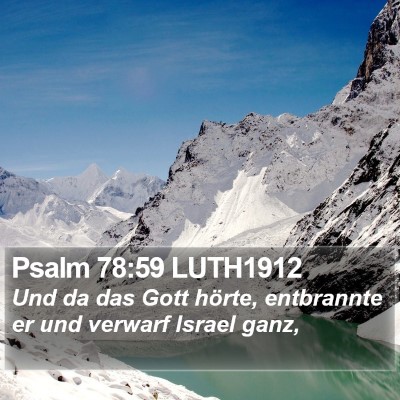
Der Psalm 78 erinnert an Gottes Erbarmen und Treue trotz des ungläubigen Wandels des Volkes Israel. In Vers 59 wird beschrieben, wie Gott hörte, was Israel tat, und daraufhin entrüstet wurde und Israel ganz verwarf. Der Vers steht im Zusammenhang mit Israels wiederholtem Ungehorsam, dem Gottes Geduld und schließlich Strafe gegenübersteht, damit der Stamm Israel Buße lernt und Gottes Herrschaft anerkennt.
Zentrale Bedeutung
Der Vers markiert eine Wendung: Gottes Geduld erreicht ihr Ende, wenn das Volk in hartnäckigem Ungehorsam verharrt. Es geht nicht um spontane Wut, sondern um eine gerechte Reaktion auf wiederholte Rebellion. Die Formulierung „entbrannte er“ deutet auf glühende Entrüstung, die in eine gerichtliche Trennung mündet. Der Text erinnert daran, dass Gottes Regierung über Israel – und über alle Völker – auf Heiligkeit, Gerechtigkeit und Buße ausgerichtet ist.
Zwei bis drei zentrale Themen
Verbindung zu verwandten Passagen
•2. Mose 32–34 – Gottes Zorn und Geduld gegenüber dem wiederholten Götzendienst, verbunden mit der Ermahnung zur Buße. Die Mammon- und Götzenkritik im Volk dient als Offenbarung der Heiligkeit Gottes.
•Psalm 78,8 – Der wiederkehrende Hinweis auf die Verstockung der Vorfahren betont das Muster der Rebellion und Gottes Geduld, gemahnt jedoch an die Notwendigkeit des Gehorsams.
•Jesaja 57,17 – Gottes Entrüstung gegen die Sünde eines rebellischen Volkes, verbunden mit der Warner auf Buße und Gottes Nähe.
Praktische Reflexion
Für den Glaubenden bedeutet dieser Vers: Gottes Charakter bleibt unverändert – heilig und gerecht. Wenn eigenes Herz sich gegen Gottes Willen verschließt, erinnert uns die Bibel daran, Buße zu suchen und Gottes Wege ernst zu nehmen. Die Warnung ist eine Einladung zur Umkehr: Nicht Verzweiflung, sondern Zuversicht in Gottesfurcht und Treue.
Kurze Zusammenfassung
Psalm 78:59 zeigt, dass Gottes Geduld eine Grenze hat. Wenn Israel trotz vieler Erklärungen und Wunder auf Ungehorsam besteht, kehrt sich Gottes Herz in Entrüstung und richtet das Volk. Die Passage dient der Mahnung, Gottes Offenbarung ernst zu nehmen und auf Buße zu setzen, damit Gottes Bund Bestand hat.
Historische Stimmen im modernen Licht
Nach den klassischen Auslegungen von Matthew Henry, Albert Barnes und Adam Clarke wird deutlich: Gottes Zorn ist kein willkürlicher Affekt, sondern eine Reaktion auf anhaltende Rebellion, die Heilsgeschichte nicht verunmöglicht. Henry betont die Erfahrung von Gottes Treue trotz menschlicher Unglauben; Barnes verweist auf die Ordnung Gottes über Nationen; Clarke hebt die gerechte Züchtigung hervor, die letztlich auf Besserung abzielt. Eine letzte, öffentliche Mahnung bleibt: Zuhören und Gehorsam gegenüber Gottes Wort ist der Weg zu Segen statt Zucht.